
Temperature Control Equipment Manuals
Locally Manufactured Chillers
Operation Manuals
| Series | File Name | Description | Start Date | End Date | Configurator Page |
|---|---|---|---|---|---|
| HRSH 090 | HRX-OM-R026-S | HRSH090 Operations manual | 8/16/2024 | Current | HRSH 090 |
All Other Temperature Control Equipment and Chillers
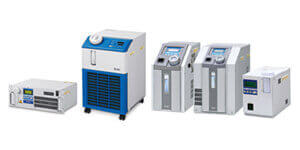
Click on Image for all other Temperature Control Instruction and Operation Manuals
Chiller Operation and Maintenance Manual Overview
The SMC industrial chiller operation and maintenance manual is a set of guidelines and general documentation for our customers from its first day at the factory and for all of its service life.
1. Safety Instructions
-
The Danger Levels: It defines what "Danger," "Warning," and "Caution" mean so workers know when an action could cause severe injury, an electric shock, a burn, or damage to the machine.
-
Safety Gear: It lists what protective equipment workers must wear, like safety shoes, gloves, and goggles, when working near the machine or handling its fluids.
-
Environmental Safety: It explains how to safely throw away old machine oil or dispose of the chemical refrigerants without polluting the air or breaking environmental laws. Waste disposal protocols ban the disposal of compressor oil into domestic waste streams and forbid venting hydrofluorocarbon (HFC) R410A refrigerant into the open atmosphere.
2. Name and Function of Parts
-
The Blueprint: it shows where all the water hoses connect, where the electrical cords plug in, and where the air filters are hidden.
-
The Control Panel: It explains the front digital screen, decoding what it means when certain green or red lights blink, and what each button does when you press it.
3. Installation Guide
-
Moving the Chiller: Because the machine is very heavy (around 270 pounds), it details exactly where to place a forklift's metal prongs so you don't puncture the machine's outer shell.
-
The Right Room Conditions: It explains that the machine needs breathing room (clear space around its vents), and can't be placed in direct sunlight, in rooms that get too hot, or at extremely high altitudes without losing its cooling power.
-
Plumbing and Wires: It shows how to connect the water pipes tightly so they don't leak, and how to safely run the thick electrical wires to a dedicated power switch.
-
Filling It Up: It explains how to fill the internal tank with standard tap water or a mixture of water and anti-freeze (glycol) if the building gets cold.
4. Starting the Product
-
Pre-start checks: Making sure everything is plugged in and the water tank is full.
-
Turning it on: Step-by-step button sequences to turn the system on, type in your desired target temperature on the digital screen, get the internal water pump humming, and turn it back off safely when the workday is done.
5.Display and Setting of Functions
-
The Child-Lock Feature: How to lock the buttons so an operator can't accidentally change the temperature by mistake.
-
Automated Timers: Setting an alarm clock so the machine turns itself on a few hours before the morning shift starts.
-
Winter Protection: Activating an "anti-freezing" mode that tells the machine to automatically wake up and circulate its water if the factory gets close to freezing overnight.
-
Unit Swapping: Changing the screen to display temperatures in Fahrenheit instead of Celsius, or pressure in PSI instead of Megapascals.
6. Troubleshooting and Alarms
-
When something goes wrong, the machine will buzz and display an error code.
-
It lists every error code the machine can generate.
-
It explains in plain language what the code means (e.g., "The water level is too low" or "An electrical fuse blew").
-
It gives a step-by-step remedy to fix the issue and reset the alarm.
7. Cleaning and Maintenance
-
Daily: Looking for puddles or listening for strange noises.
-
Monthly: Sliding out the air filters and brushing off the dust so the machine doesn't choke.
-
Quarterly: Completely draining the machine and filling it with fresh, clean water so algae or slime doesn't grow inside the pipes.
8. Technical Data and Warranties
The back of the temperature control equipment manual features tables filled with mechanical data. It includes blueprints showing the machine's exact dimensions, diagrams of how the water flows inside, configuration files, specifications on how much power it draws, and the rules regarding the machine's 1-year repair warranty.
These chiller user manuals are provided to help customers take effective precautions and avoid common problems when installing and maintaining their chiller, ensuring its efficient operation and prolonging its service life.